

Rochester, New York, experiences a humid continental climate characterized by warm summers and cold, snowy winters. Average high temperatures range from 29.3°F (-1.5°C) in January to 77.9°F (25.5°C) in July. Precipitation is fairly consistent throughout the year, with May typically being the wettest month, averaging 2.99 inches (76 mm) of rainfall. Snowfall is common from December through April, with February often seeing the highest average snowfall of 7.01 inches (178 mm).
City’s Climate Action Plan
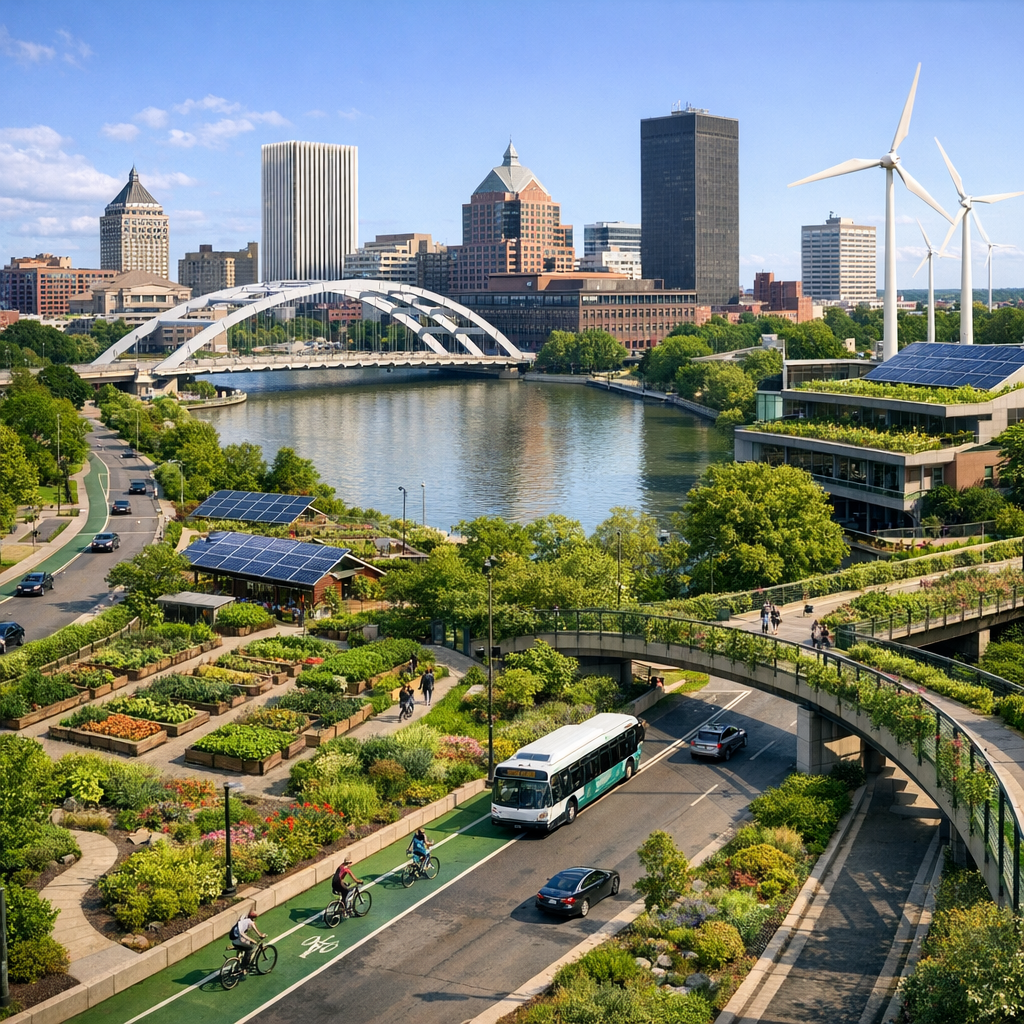
The City of Rochester is actively working to address climate change through its Climate Action Plan. This plan outlines strategies to reduce pollution, prepare for climate impacts, and build a healthier, more resilient community. Key focus areas include energy, transportation, waste, water, and land use. The city is currently seeking community input to update the plan and set new goals.
Environmental Initiatives
Several initiatives are underway to promote sustainability in Rochester:
Tree Planting Program
Since 2023, the city has planted 6,000 trees, with a goal of reaching 70,000 by 2025. Trees help cool neighborhoods, improve air quality, and combat climate change.
ROC City Compost Program
This program allows residents to collect food waste and other compostable materials, reducing landfill waste and greenhouse gas emissions. Participants receive a kit, including a compost guide and a 5-gallon bucket for drop-off at designated locations.
Electric Vehicle Charging
The city has installed 30 charging ports in public parking areas to encourage the adoption of electric vehicles and reduce transportation-related emissions.
University of Rochester’s Sustainability Efforts
The University of Rochester promotes sustainability through education, research, and campus operations. Initiatives include community engagement programs, sustainability research across various departments, and efforts to reduce the university’s environmental footprint.
Understanding Rochester’s climate and supporting these environmental initiatives can help residents contribute to a more sustainable and resilient community.